In Development — 2026

Kypros.

The most powerful Arduino-compatible board ever made.

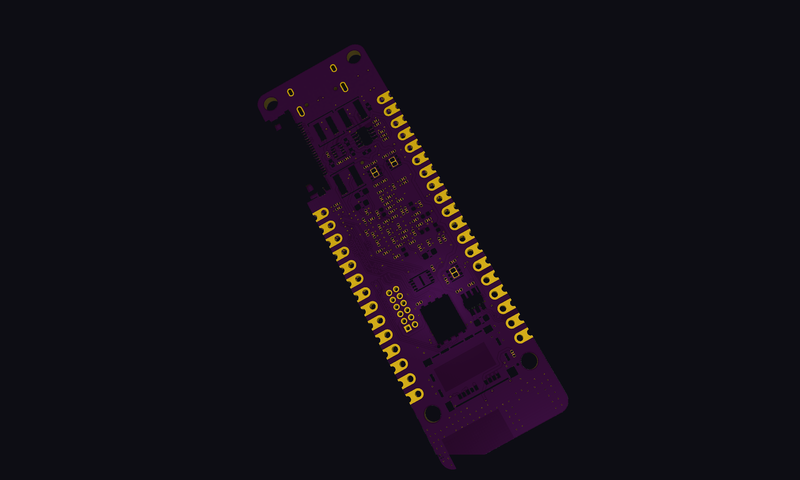
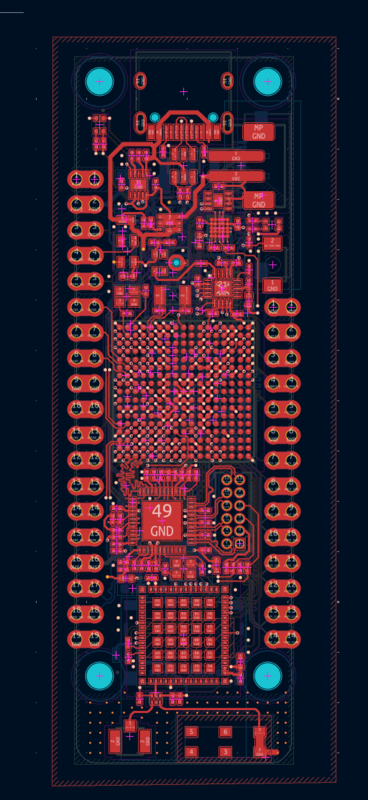
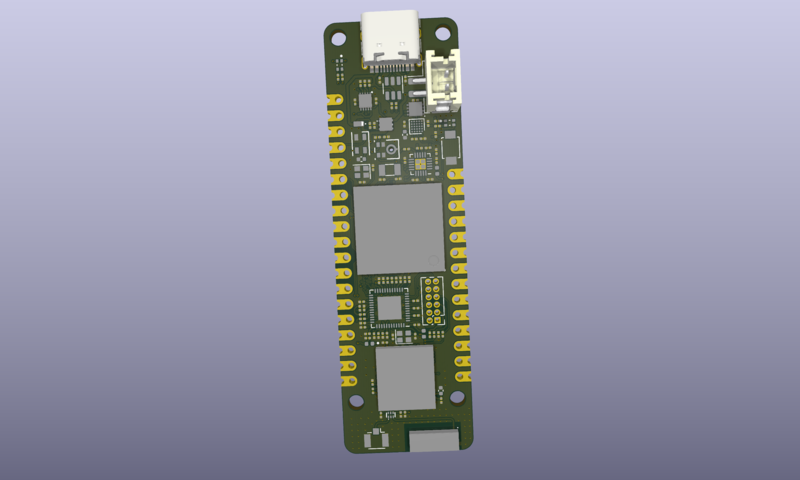
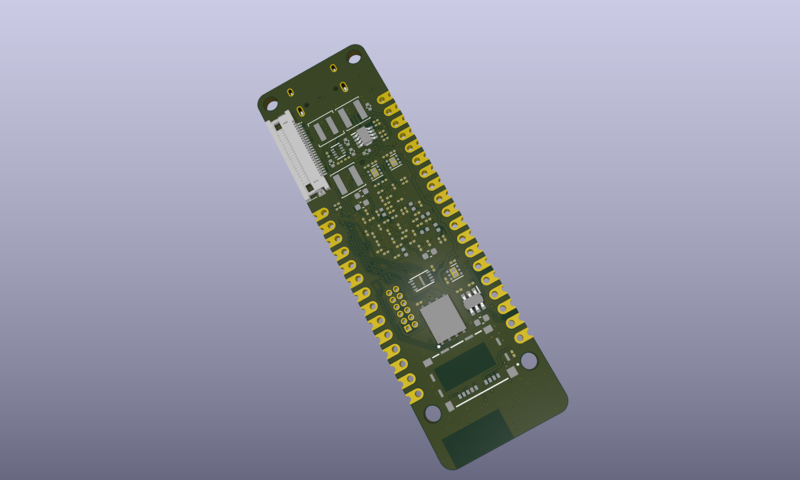
Dual-core NXP i.MX RT1176 running at 1GHz. WiFi 6, Bluetooth 5.3, Zigbee, Matter, Gigabit Ethernet, stereo audio codec, ultrasonic MEMS mic, and a camera interface — all on a 69×18mm 8-layer HDI board roughly the size of a Raspberry Pi Pico.

This is real. Rotate it.

WiFi 6. Bluetooth 5.3. Zigbee. Matter. Gigabit Ethernet. Stereo audio. Ultrasonic mic. Camera. All on one board. Roughly the footprint of a Raspberry Pi Pico — with ten times the capability.

Designed from scratch by Valentino — 16 years old.
No investors. No degree. No industry backing. Just two years of obsession with making the board he wished existed.

1 GHz
NXP i.MX RT1176 — Dual Cortex-M7 + M4
6 Radios
WiFi 6 · BT 5.3 · Zigbee · Thread · Matter
24 MB
16MB NOR Flash + 8MB QSPI PSRAM
69×18mm
8-Layer HDI · Pico-Class Footprint
Powered by

Built different.

Raw Performance

NXP MIMXRT1176 — dual core Cortex-M7 at 1GHz + Cortex-M4 at 400MHz. More raw compute than anything else in its class. Double-precision FPU and hardware DSP on both cores.

Tri-Radio Wireless

Murata Type 2EL module — WiFi 6 (802.11ax) dual-band 2.4/5GHz at 601Mbps, Bluetooth 5.3, plus 802.15.4 for Zigbee, Thread, and Matter. One module, every protocol.

Display + Camera

MIPI DSI display output and camera CSI FPC connector directly on board. HDMI output via ADV7535 bridge coming in Rev 2. Hardware 2D GPU (PXP) for real-time pixel processing.

Studio-Grade Audio

NXP SGTL5000 stereo codec — 98dB SNR, headphone amp, line-in, mic-in, line-out. Plus an ST IMP23ABSU MEMS microphone with ultrasonic capture up to 80kHz. Audio from day one.

LiPo Battery System

Integrated LiPo charging circuit with automatic power path switching between USB-C and battery. Boost converter, 3.3V/1.8V/1.0V regulated rails. Truly portable.

1Gbps Ethernet

Full Gigabit Ethernet via pin headers — 10/100/1000 Mbps with dedicated PHY. Industrial-grade wired networking on a microcontroller board. No adapters needed.

Everything Under The Hood

Every chip, every pin, every protocol — extracted directly from the Kypros schematic. Real part numbers, real specs.

Processor

SoC NXP MIMXRT1176DVMAA
Primary Core ARM Cortex-M7 @ 1 GHz
Secondary Core ARM Cortex-M4F @ 400 MHz
Architecture Dual-core asymmetric multiprocessing
FPU Double-precision (M7) + Single-precision (M4)
DSP Hardware DSP instructions on both cores
GPU 2D PXP — hardware pixel pipeline
Internal SRAM 2 MB on-chip
🧠

Memory

PSRAM AP Memory APS6404L-3SQR-ZR — 64Mbit (8MB)
PSRAM Interface QSPI (SPI/QPI SDR) — up to 133MHz
PSRAM Voltage 2.7V – 3.6V single supply
Flash Winbond W25Q128JVPIQ — 128Mbit (16MB) NOR
Flash Interface SPI / Dual SPI / Quad SPI / QPI — up to 133MHz
Flash Features 4KB sectors, Execute-in-Place (XIP) capable
Internal SRAM 2 MB on-chip (RT1176)
MicroSD SDIO interface — hot-swappable expandable storage
Total Memory 2MB SRAM + 8MB PSRAM + 16MB Flash + MicroSD
📡

Wireless — Murata LBES5PL2EL-923 (Type 2EL)

Chipset NXP IW612 tri-radio combo
WiFi Standard 802.11a/b/g/n/ac/ax (WiFi 6)
WiFi Bands Dual-band 2.4 GHz + 5 GHz
WiFi Speed Up to 601 Mbps (MCS11, 80MHz channel)
WiFi Channels 20 MHz, 40 MHz, 80 MHz SISO
TX Power 18 dBm
Sensitivity -97 dBm
Bluetooth Bluetooth 5.3 BR/EDR/LE
802.15.4 Zigbee, Thread, Matter — native support
Host Interface SDIO (WiFi), UART/SPI (BT), SPI (802.15.4)
Supply Voltage 1.71V–1.89V / 3.14V–3.46V
🌐

Wired Networking

Ethernet Gigabit (10/100/1000 Mbps)
Connection Via pin headers — breakout-friendly
PHY Interface RGMII to RT1176
Features Auto-negotiation, auto MDI/MDI-X
🔌

USB

USB-C USB 2.0 OTG — power, data & programming
USB Host Dedicated USB 2.0 host port (Type-A header)
USB Modes Host, Device, OTG
🎵

Audio System

Codec NXP SGTL5000XNLA3 — stereo low-power codec
SNR 98 dB
THD+N -80 dB
Power (DAC→HP) 4 mW — ultra-low-power
Inputs Line-in (stereo) + Mic-in
Outputs Line-out (stereo) + Headphone out (with amp)
Sample Rate Up to 96 kHz
Digital Interface I²S audio, I²C control
Package 20-QFN (3×3mm)
🎙️

Ultrasonic MEMS Microphone

Part ST IMP23ABSUTR
Type MEMS (silicon) — analog output, bottom port
Frequency Range 35 Hz – 80 kHz (ultrasonic capable)
Directionality Omnidirectional
SNR 64 dB
Sensitivity -38 dBV ±1 dB @ 94 dBSPL
Acoustic Overload 130 dBSPL
Current Draw 150 µA max — ultra-low-power
Supply 1.52V – 3.6V
🖥️

Display & Camera

Display MIPI DSI output — LCD/OLED panels
Camera CSI FPC connector — directly on board
Camera Interface Parallel CSI — CMOS sensors (OV5640, OV7725, etc.)
GPU 2D PXP — hardware pixel pipeline for real-time processing
HDMI REV 2 1080p@60fps via ADV7535 MIPI-to-HDMI bridge — coming in Rev 2
🔋

Power System

Primary Input USB-C 5V
Battery LiPo single-cell (3.7V nominal)
Charging Integrated LiPo charge management IC
Power Path Automatic changeover — seamless USB-C ↔ LiPo switching
Boost Converter Step-up from battery voltage to system rails
Regulated Rails 3.3V, 1.8V, 1.0V (DCDC + LDO)
Protection Overcurrent, reverse polarity, thermal shutdown
🛠️

I/O & Debug

GPIO Dual-row header — extensive Arduino-compatible pinout
Bus Protocols SPI, I²C, UART, CAN-FD, PWM, ADC
Logic Level 3.3V
RGB LED Programmable, user-addressable
Debug SWD/JTAG via dedicated header
Programming USB-C bootloader + SWD flash
Form Factor 69 × 18 mm — 8-layer HDI PCB
Mounting M2 mounting holes

System Architecture

Click any block to see detailed specs. Every subsystem mapped from the schematic.

i.MX RT1176 Cortex-M7 @ 1 GHz Cortex-M4F @ 400 MHz 2MB SRAM · 2D GPU · DSP · Crypto WiFi 6 + BT 5.3 + Zigbee · Thread · Matter Murata Type 2EL · 601Mbps Gigabit Ethernet 1Gbps · RGMII PHY · Headers USB-C (OTG) Power · Data · Program · Charge USB Host USB 2.0 · Type-A Header Audio Codec SGTL5000 · 98dB SNR HP Out · Line I/O · Mic · I²S MIPI Display DSI · LCD/OLED · PXP GPU Camera (CSI) FPC Connector · On-Board Ultrasonic Mic IMP23ABSU · 35Hz–80kHz MEMS · 64dB SNR · 150µA MicroSD SDIO · Hot-swap · Expandable RGB LED Programmable · User-addressable PSRAM — 8MB APS6404L · QSPI · 133MHz Flash — 16MB W25Q128JV · QSPI · 133MHz Power Management LiPo Charge · USB-C ↔ Battery 3.3V · 1.8V · 1.0V · DCDC+LDO GPIO Headers SPI · I²C · UART · CAN-FD PWM · ADC · 3.3V Logic HDMI OUTPUT — REV 2 PLANNED · 1080p@60 · ADV7535 Debug (SWD/JTAG) J-Link · ST-Link · CMSIS-DAP

What Will You Build?

🏠

Smart Home Hub

WiFi 6 + Bluetooth 5.3 + Zigbee + Thread + Matter — all on one board. Run every smart home protocol natively. No Pi, no dongles, no compromises.

🤖

Robotics & Vision

Camera CSI directly on board + 1GHz compute + real-time M4 core. Run computer vision on M7 and motor control on M4 simultaneously. 8MB PSRAM for frame buffers.

🎵

Audio & Synthesis

SGTL5000 stereo codec (98dB SNR) + ultrasonic MEMS mic (80kHz) + headphone amp + MicroSD. Build synthesisers, audio processors, or ultrasonic sensing devices.

📊

Industrial IoT

CAN-FD + Gigabit Ethernet + WiFi 6 + battery backup. Deploy edge compute nodes with 1GHz real-time processing and 601Mbps wireless throughput.

🎮

Handheld Devices

69×18mm + LiPo battery system + MIPI display + audio codec. Small enough for portable instruments, game consoles, field tools, or medical devices.

🔬

Ultrasonic & Sensing

80kHz MEMS mic + dual-core processing + WiFi 6. Build ultrasonic rangefinders, bat detectors, structural health monitors, or industrial sensing rigs.

Nothing else comes close.

We didn't just add more specs. We built a different category.

KYPROS Teensy 4.1 Portenta H7 Pico 2 W Nano ESP32 SparkFun ESP32-C5 ESP32-S31 UPCOMING
CPU RT1176 1GHz M7 + 400MHz M4 RT1062 600MHz M7 STM32H747 480MHz M7 + 240MHz M4 RP2350 150MHz dual M33/RISC-V ESP32-S3 240MHz dual Xtensa LX7 ESP32-C5 240MHz single RISC-V 320MHz dual RISC-V
Architecture Dual-core asymmetric Single core Dual-core asymmetric Dual-core (ARM + RISC-V) Dual-core symmetric Single core Dual-core
SRAM 2MB + 8MB PSRAM 1MB 1MB + 8MB SDRAM 520KB 512KB + 8MB PSRAM 8MB PSRAM 768KB + ext PSRAM
Flash Storage 16MB NOR (W25Q128) 8MB 2MB + 16MB QSPI 4MB 16MB 8MB ext flash
WiFi WiFi 6 (802.11ax) WiFi 4 (b/g/n) WiFi 4 (n) WiFi 4 (b/g/n) WiFi 6 dual-band WiFi 6 (2.4GHz)
Bluetooth BT 5.3 BT 5.1 BT 5.2 BT 5.0 LE BT 5 LE BT 5.4
Zigbee / Thread / Matter Native 802.15.4
Ethernet Gigabit (1Gbps) w/ adapter 10/100 only Gigabit
Audio Codec SGTL5000 (98dB SNR)
Ultrasonic Mic 80kHz MEMS
MIPI Display
Camera Input CSI FPC on-board
USB-C OTG Micro-B Micro-B USB
Battery Management LiPo + auto switchover LiPo charging
CAN-FD
MicroSD
Arduino IDE Community Expected
HDMI Output Rev 2
Price TBA ~$30 ~$100 ~$7 ~$20 ~$25 N/A yet
Real-time Bare-metal + RTOS

ESP32-S31 specs are based on Espressif's preliminary datasheet. Kypros is the only board shipping with all these features integrated.

Where it began.

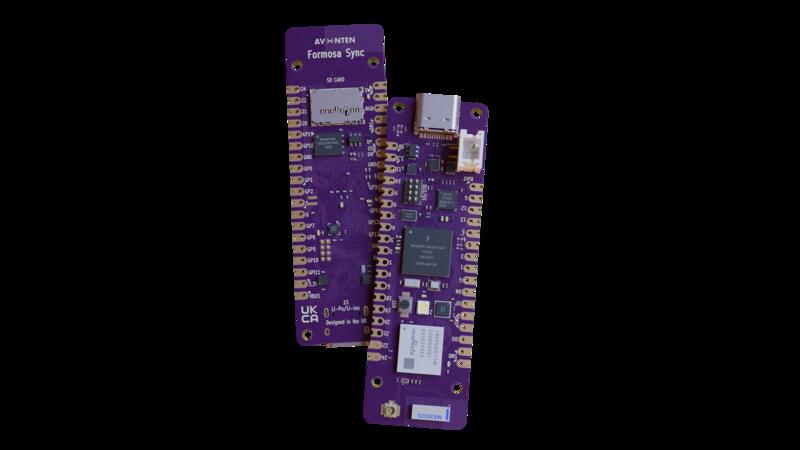
Aventen has been building development boards since Formosa Sync — our first, designed from scratch in Eastbourne, UK. Kypros is the second chapter. Same obsession with performance and simplicity. Dramatically more powerful. Nothing like it exists.

Get Kypros.

Whether you're a maker building your next project or an enterprise shipping products at scale — we've got a path for you.

FOR MAKERS

Pre-Order & Early Access

Be among the first to get your hands on Kypros. Join the waitlist for early access pricing and priority shipping.

  • Pre-order the board at early-bird pricing
  • Priority waitlist for first production run
  • Community support & forums
  • Full Arduino IDE compatibility
  • Open documentation & examples
Join the Waitlist
FOR ENTERPRISE & OEM

Custom Solutions & Volume

We tailor the Kypros platform to your technical requirements. Evaluation boards, custom PCB variants, volume manufacturing.

  • Custom PCB design for your application
  • Evaluation samples & development kits
  • Dedicated engineering support
  • Volume pricing & supply chain management
  • NDA-protected documentation
INVESTORS & PARTNERS

Investment & Partnership

Kypros is pre-revenue and actively seeking strategic investment, grants, and manufacturing partnerships to bring a new category of development board to market.

  • Seed / grant funding discussions
  • Strategic silicon partnerships
  • Manufacturing & distribution partners
  • Technology licensing opportunities
  • Full technical documentation under NDA
V

Valentino

Founder — Aventen Innovations

THE PERSON BEHIND THE BOARD

16 years old.
2 years building.
No investors. No backing.

Valentino started Aventen Innovations at 14 — no investors, no engineering degree, no industry connections. Just a laptop, a copy of KiCad, and the conviction that every dev board on the market was leaving too much on the table.

Kypros wasn't born in a university lab or a corporate R&D department. It was born out of frustration — frustration that every board makes you choose between connectivity, audio, sensors, or performance. Why not all of them?

Every schematic was drawn, every component was sourced, every trace was routed — by one person. The same person who taught himself PCB design, negotiated with component distributors, and designed a board that competes with products backed by teams of 50.

"I didn't wait for permission. I just started designing."
Hardware Design i.MX RT1176 PCB Engineering Aventen Innovations Ltd

Be first.

Kypros is in development. Join the waitlist and we'll let you know the moment it's available — before anyone else.

No spam. Ever. Just Kypros updates from Aventen Innovations.

Limited early access spots